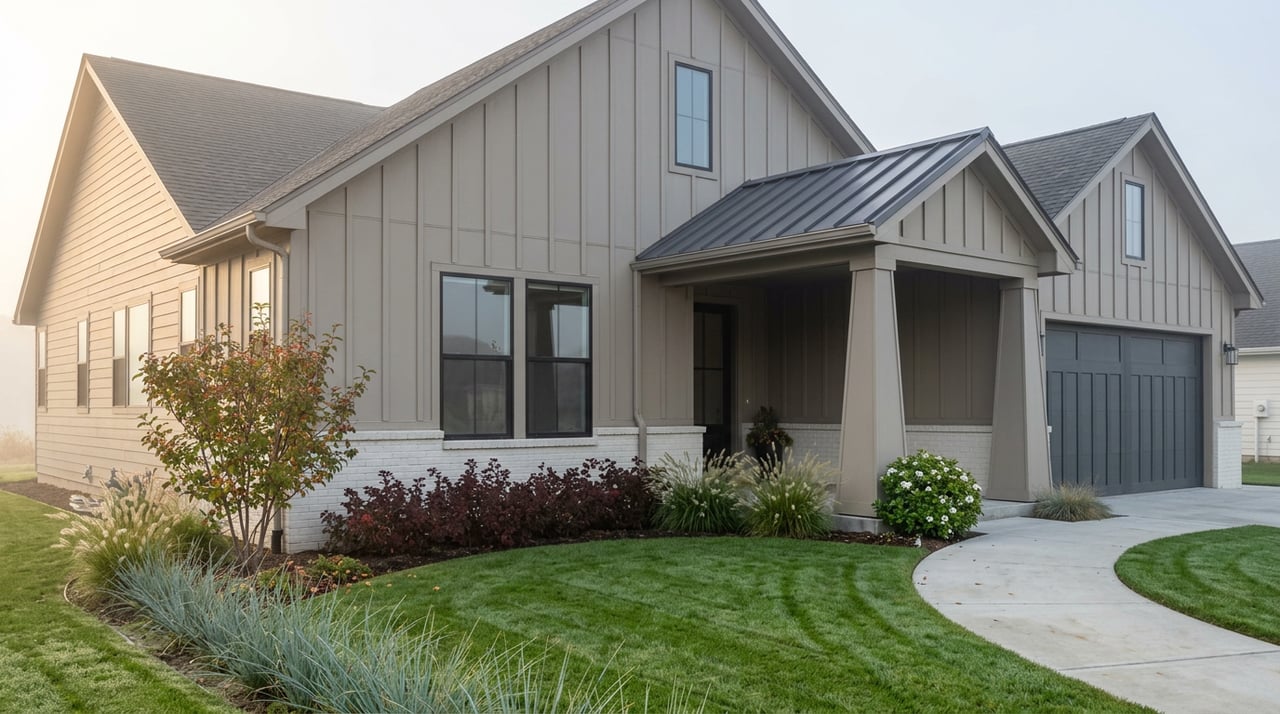
What Buyers Should Know About HOA Resale Certificates in Lacey's Newer Subdivisions
September 3, 2026
September 3, 2026
Buyers closing on new construction in Lacey tend to spend their inspection contingency worrying about the roof, the furnace, and whether the drywall was taped before or after the last hard freeze. Those are reasonable things to check. But in Lacey's fastest-growing subdivisions, buyers may also need to review an HOA document: the resale certificate.
The house can be finished, permitted, and move-in ready while its homeowners association is still establishing its processes. Communities like Hawks Prairie, Woodland Creek, and Meridian Campus may form new associations alongside construction, and their boards may be handling developer transitions while applying changing state requirements.
Homeowners associations in Washington that qualify as a common interest community generally have to produce a resale certificate before a home inside it can change hands. Under the Washington Uniform Common Interest Ownership Act, known as WUCIOA, that certificate has to cover 26 separate disclosure items: current assessments, pending litigation, reserve fund status, insurance coverage, and more. The association has 10 days to produce it once requested, the preparation fee is capped at $275 for the first certificate and $100 for an update, and once the buyer actually receives the certificate, a five-day right to cancel the purchase starts running. That right can't be waived away in the contract.
None of this is new in concept. What changed is who it applies to. A 2025 law, ESSB 5129, pushed several WUCIOA requirements onto every Washington HOA regardless of when it was formed, effective January 1, 2026. That includes the reserve study rule: associations now have to maintain a study updated at least every three years, with an annual refresh in between, whether they were built in 2004 or 2024. The full merger of every Washington HOA under WUCIOA is scheduled for January 1, 2028, when the older Homeowners' Associations Act expires for good.
Lacey buyers are shopping in the middle of that transition right now.
An HOA formed decades ago in an established Lacey neighborhood may have years of records, management arrangements, and board experience. A newer association may still be establishing its records and processes while state requirements change.
Hawks Prairie, Woodland Creek, and Meridian Campus are examples of Lacey communities where new associations form alongside construction.
A first-generation HOA may still be completing its first three-year reserve study cycle or may not yet have hired a management company specializing in resale certificate paperwork. Board members may be learning fiduciary duties and Washington statute while handling other association responsibilities.
| Established Lacey HOA (formed before 2018) | New Lacey subdivision HOA (formed 2018 or later) | Every Lacey HOA (starting January 1, 2028) | |
|---|---|---|---|
| Governing law today | RCW 64.38, with some WUCIOA provisions now layered in | WUCIOA (RCW 64.90) from formation | WUCIOA only |
| Reserve study | Now required to update every three years under the 2026 rule change | Required from the start under WUCIOA | Same requirement, single statute |
| Resale certificate | Generally required; exemptions may apply, 26 items, $275 fee cap | Generally required; exemptions may apply, 26 items, $275 fee cap | Generally required; check for applicable exemptions |
| Governance track record | Often years of board meetings and prior certificates on file | Frequently its first or second resale cycle | Depends on the individual association |
The rescission clock is where the mechanics get real for a buyer. It doesn't start when you sign the purchase agreement. It starts when you actually receive the resale certificate. If a first-generation board is slow to produce it, the countdown to your right of rescission hasn't even begun, and neither has the clock your lender and title company are using to schedule closing.
This is different from a standard home inspection deadline, where the timeline is set by contract and both sides know it going in. The timing of a resale certificate depends on how quickly the association can prepare it. In an established association with a management company on retainer, that can mean a same-week turnaround. Where the board prepares financial records itself, 10 days can become the real deadline, not a formality.
A certificate with blanks may leave important information unclear to the buyer, seller, and title company.
This matters in newly formed associations without a dedicated property manager. It's worth asking your agent, before you write an offer, whether the HOA in question self-manages or has hired a firm that specializes in WUCIOA compliance. It's a fair, neutral question, and how it gets answered tells you a lot about how smooth your resale certificate process is likely to be.
None of these questions require a lawyer to ask. They require someone who already knows what a resale certificate is supposed to contain, and who knows to ask for it early enough that a slow answer doesn't collapse your closing timeline.
Does every home in a Lacey subdivision come with an HOA? Not automatically. According to the Washington REALTORS legal hotline, some smaller plat communities currently qualify for exemptions from the resale certificate requirement, based on unit count and assessment size. That exemption narrows considerably once the 2028 transition takes effect, so a property that's exempt today may not be exempt by the time it resells again.
What happens if the seller's HOA can't produce the certificate in time? The statute gives the association 10 days from request. If it misses that window, your agent and the title company have leverage to extend or renegotiate the closing timeline, but that's a conversation you want to start on day one of escrow, not day nine.
Do older, established Lacey neighborhoods face any of this? Some of it. The 2026 rule change already extended reserve study requirements to older HOAs too. The difference is that established associations usually have more history and more infrastructure to lean on when the paperwork comes due.
If you're comparing new construction across Lacey's growing subdivisions and want to understand what a specific HOA's paperwork looks like before you write an offer, that's exactly the kind of groundwork Christina Keller walks clients through from the first conversation. Let's Connect and talk through what a smooth closing actually looks like in the neighborhood you're considering.
This article is general information, not legal, tax or financial advice. Consult a qualified professional about your situation.
Stay up to date on the latest real estate trends.
Christina Keller believes every client, property, and transaction is unique. Drawing from her background in hospitality, international sales, and business leadership, she provides attentive guidance, strategic negotiation, and personalized service designed to make every real estate experience smooth, successful, and rewarding.
CHRISTINA KELLER
[email protected]
360.951.2309
ADDRESS
2622 N PROCTOR ST
TACOMA, WA 98407